


Net-Zero
SK Square has established a strategy to achieve carbon neutrality by 2040 and we also actively participate in social activities to respond to the climate change crisis.

Net-Zero
SK Square has established a strategy to achieve carbon neutrality by 2040 and we also actively participate in social activities to respond to the climate change crisis.
Net-Zero 2040
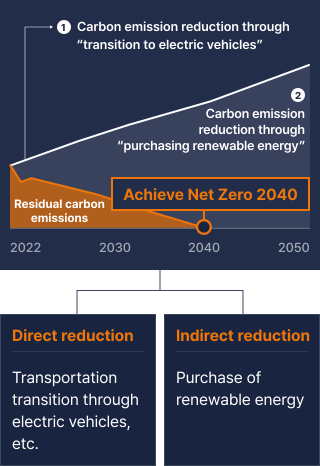
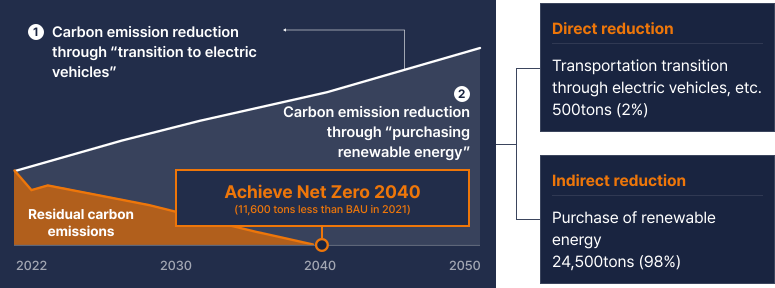
SK Square has set 2040, earlier than 2050, as the target year for achieving carbon neutrality, based on the RCP Scenario1) and the IPCC Special Report on Global Warming 1.5˚C2). This target is 10 years earlier than the national target(NDC) of 2050 for green house gas reduction. The RCP scenario considered RCP 4.5(moderate scenario) and RCP 8.5(unmitigated greenhouse gas emission growth). In order to limit the global average temperature rise by 1.5℃, we engage in direct reduction activities by shifting to electric vehicles and indirect reduction activities by purchasing renewable energy. We plan to continue to implement active climate change response activities by joining RE100 in the future.
1) Representative Concentration Pathways (RCP): Climate change scenarios by greenhouse gas concentrations
2) An analysis report on greenhouse gas emission pathways to limit the global average temperature rise to 1.5˚C compared to pre-industrial levels by 2100
Greenhouse Gas Emission Target
(Scope 1+2)
| Estimated emissions(BAU 20211)) | |||
|---|---|---|---|
| Unit | tCO2eq | ||
| 2030 | 713.6 | ||
| 2035 | 779.6 | ||
| 2040 | 849.4 | ||
| Emission target2) | |||
|---|---|---|---|
| Unit | tCO2eq | ||
| 2030 | 308.9 | ||
| 2035 | 154.4 | ||
| 2040 | 0 | ||
| Emission target ratio to BAU | |
|---|---|
| Unit | % |
| 2030 | 43 |
| 2035 | 20 |
| 2040 | 0 |
| Category | Unit | 2030 | 2035 | 2040 |
|---|---|---|---|---|
| Estimated emissions (BAU 20211)) |
tCO2eq | 713.6 | 779.6 | 849.4 |
| Emission target2) | tCO2eq | 308.9 | 154.4 | 0 |
| Emission target ratio to BAU |
% | 43 | 20 | 0 |
1) BAU(Business As Usual): Estimated future greenhouse gas emissions on the assumption that no steps are taken to limit greenhouse gas emissions.
2) Market-based emission target
Greenhouse Gas Emissions
(Scope 1+2)
| Location-based | |||
|---|---|---|---|
| Unit | tCO2eq | ||
| 2022 | 594.6 | ||
| 2023 | 635.5 | ||
| Market-based* | |
|---|---|
| Unit | tCO2eq |
| 2022 | 594.6 |
| 2023 | 401.2 |
| Category | Unit | 2022 | 2023 |
|---|---|---|---|
| Location-based | tCO2eq | 594.6 | 635.5 |
| Market-based* | tCO2eq | 594.6 | 401.2 |
* Emissions reflect the purchase (use) of renewable energy through Green Premium